
By Juan Zurita Victoria, MBA, Chair of Athlete Support and Programs, Oax Sport
Camp at a glance
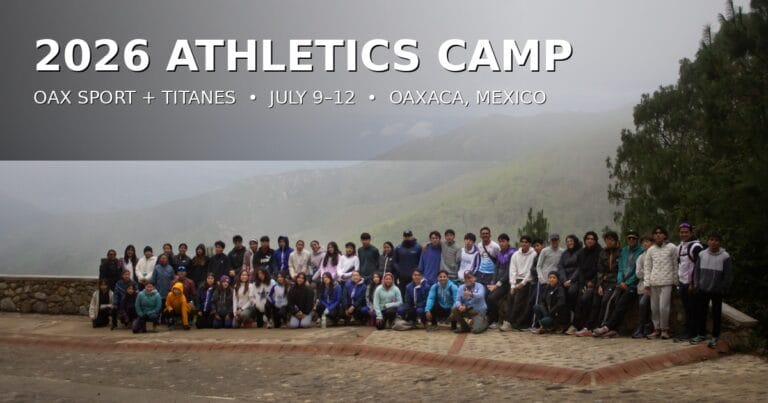
Who: We organized the camp for 60 athletes, coaches, and students from 10 clubs and institutions.
What: The four-day program covered running technique, hurdle drills, altitude training, aquajogging, sports psychology, nutrition, functional strength, and physical recovery.
When: July 9–12, 2026.
Where: Oaxaca de Juárez and Ixtepeji, Oaxaca, Mexico.
Why: We wanted athletes, coaches, and students in Oaxaca to receive practical instruction from local specialists and an experienced U.S. athletics coach.
How: Registration fees, Oax Sport funds, donated and contributed goods, pro bono professional services, institutional facilities, volunteer work, and Jeanine Bourcier Holmlund’s unreimbursed travel and lodging covered the program.
Overview
From July 9 to 12, 2026, we organized the Oax Sport–Titanes 2026 Athletics Camp in Oaxaca de Juárez and Ixtepeji.
Sixty athletes, coaches, and students. Ten running clubs and institutions. Four days.
Approximately 10 organizers, specialists, volunteers, and logistics personnel worked across the program. Athletes trained in running mechanics, hurdle drills, track work, mountain and altitude running, aquajogging, functional strength, sports psychology, nutrition, physical recovery, and training-plan design.
We used the track and classrooms at UABJO University, the 5 Señores swimming pool, Parque Primavera, the Hermanos Flores Magón Sports Complex, and Ixtepeji. Participants moved between track, classroom, pool, gym, and mountain sessions over four full days.
The report records a minimum documented project value of US$8,782. This figure includes cash resources, donated and contributed goods, estimated pro bono professional services, and travel and lodging that Jeanine Bourcier Holmlund paid without reimbursement.
The total excludes Jeanine’s coaching, workshop preparation, pre-camp university lecture, professional instruction, and the unpaid work of organizers and volunteers.
Participation
The following clubs and institutions took part:
- Titanes
- Búhos de Zaachila
- Inspira Deportes
- Oaxakenia
- Cheetas
- Titanes Triatlón
- Facultad de Cultura Física y Deporte, LED UABJO
- Universidad La Salle
- Ixhoye
- Centauros
Athletes, students, and coaches from these groups compared training methods, shared practical experience, and worked together throughout the camp.
Coach Uber Clain Herrera Aquino coordinated Titanes’ work and led practical sessions throughout the camp. I coordinated Oax Sport’s work before and throughout the program. We worked together during the planning and delivery of the camp.
This was the first camp of this size that Oax Sport and Titanes organized together after our 2025 collaboration.
An earlier Titanes event first brought Jeanine into contact with the group. She approached athletes and coaches after watching them train.
When we contacted her about the July camp, she confirmed within days and bought her flights. We had roughly one month to plan.
Purpose of the camp
We wanted athletes, coaches, and students in Oaxaca to receive practical instruction in technique, nutrition, psychology, strength, and recovery.
The program focused on the following work:
- Improve running mechanics and physical preparation.
- Show coaches practical ways to structure training sessions.
- Introduce aquajogging and altitude training.
- Give participants practical guidance on nutrition, psychology, and recovery.
- Give coaches time to compare methods and discuss athlete needs.
- Give students practical experience in coaching and event operations.
- Give older athletes opportunities to lead warm-ups and mobility drills.
- Distribute athletic products, equipment, and educational resources.
- Record lessons for future camps.
Jeanine Bourcier Holmlund
The principal guest coach, Jeanine Bourcier Holmlund, traveled from Oakland, California, through San José International Airport to work with participants in Oaxaca.
Jeanine holds USA Track & Field Level 3 Endurance and Level 2 Speed certifications. She also holds a Road Runners Club of America Level 2 certification and works as a certified USA Track & Field official. Her coaching experience includes university, school, community, track, and cross-country programs.
Jeanine worked throughout the camp without salary, professional fees, travel allowance, reimbursement, or other compensation from Oax Sport or Titanes.
She paid for her airfare, baggage, lodging, and other costs tied to her participation.
She flew Volaris from San José and landed in Oaxaca on July 7, two days before the camp started, carrying multiple bags containing donated GU sports-nutrition products, footwear, clothing, books, and training materials.
Her work ranged from running mechanics and hurdle drills on the track to mountain training at altitude in Ixtepeji. She led aquajogging sessions, coached athletes and local coaches side by side, trained students, and prepared and delivered a workshop on session design. She presented in Spanish when possible and switched to English for technical points when necessary.
Jeanine secured and transported donated GU sports-nutrition products to Oaxaca. She also personally contributed footwear, clothing, accessories, books, and educational materials.
The goods Jeanine secured, transported, or personally contributed, together with her unreimbursed travel and lodging, had a documented value of US$4,463. This amount excludes her coaching, workshop preparation, pre-camp university lecture, and other professional work.
Pre-camp university guest lecture
Before the official four-day camp began, Jeanine gave a guest lecture and workshop at the Facultad de Cultura Física y Deporte, LED UABJO. University students and professors attended the session.
The official title was “Entrenamiento Deportivo y Tendencias Internacionales en Deportes de Tiempo y Marca.” Jeanine discussed sports training, international developments in sports measured by time or performance marks, and professional pathways in sport.
The activity resulted from collaboration between the faculty and Oax Sport. It took place before the official camp, so its attendees are not included in the camp’s total of 60 athletes, coaches, and students.
Day 1: Running technique, sports psychology, and aquajogging
On July 9, we began at Ciudad Universitaria, the main campus of the Universidad Autónoma “Benito Juárez” de Oaxaca.
The first session moved from activation through coordination, hurdle drills, running technique, posture work, and mechanics, ending with a cooldown.
After training, participants shared breakfast and met athletes and coaches from other clubs and institutions.
Participants brought or paid for their own lunch. We provided donated GU gels, hydration mixes, and energy bars during the training sessions.
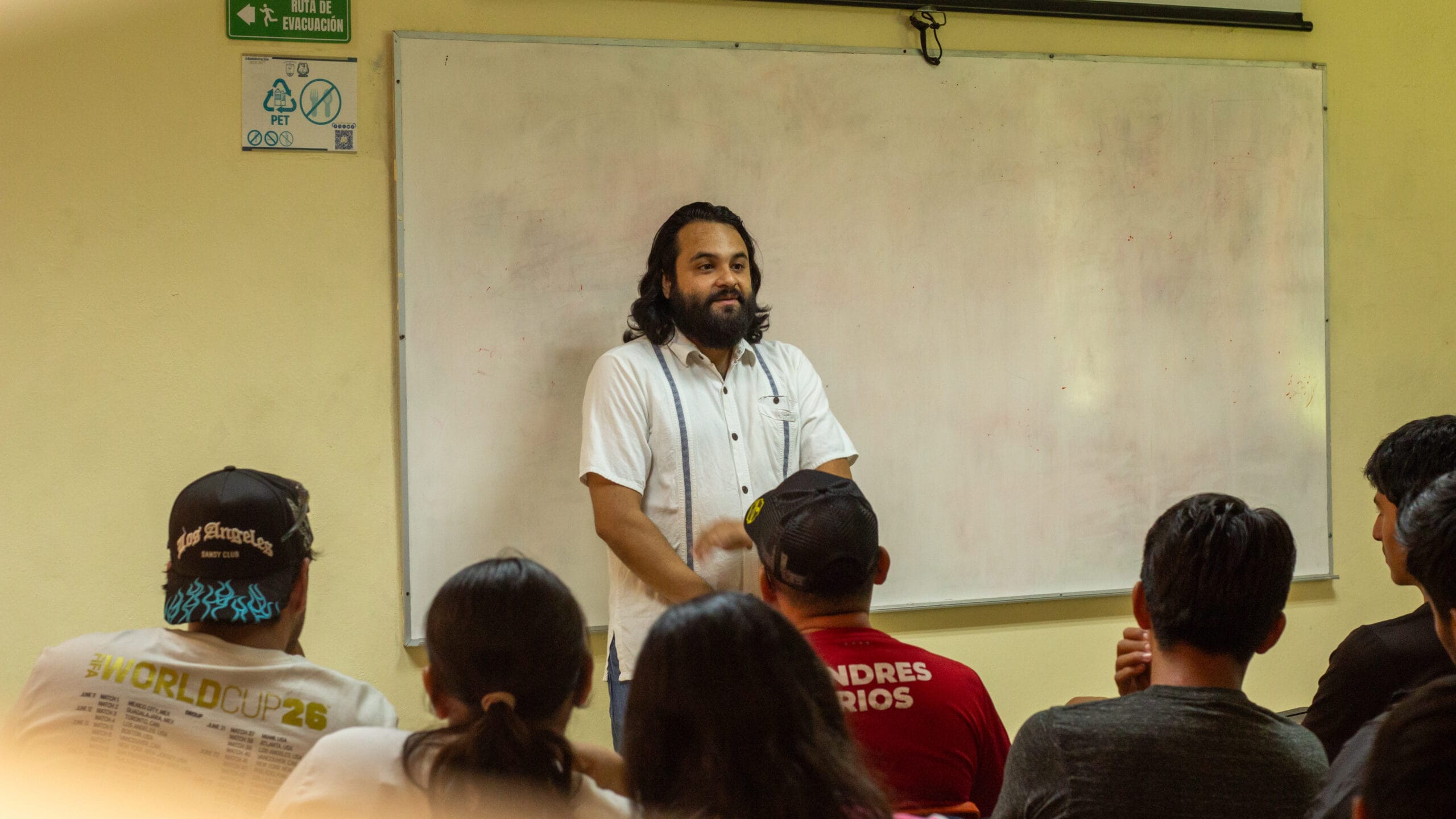
Dr. Emilio Nocedal Rojas then presented “The Mind of a Champion,” a session on confidence, mental preparation, competitive attitude, and the psychological demands of training and competition.
In the afternoon, the group traveled to the 5 Señores swimming pool for aquajogging, which uses running movements in deep water to reduce impact.
Athletes completed running movements, jumps, and conditioning exercises in the water. The session gave them aerobic and technical work with less stress on muscles and joints.
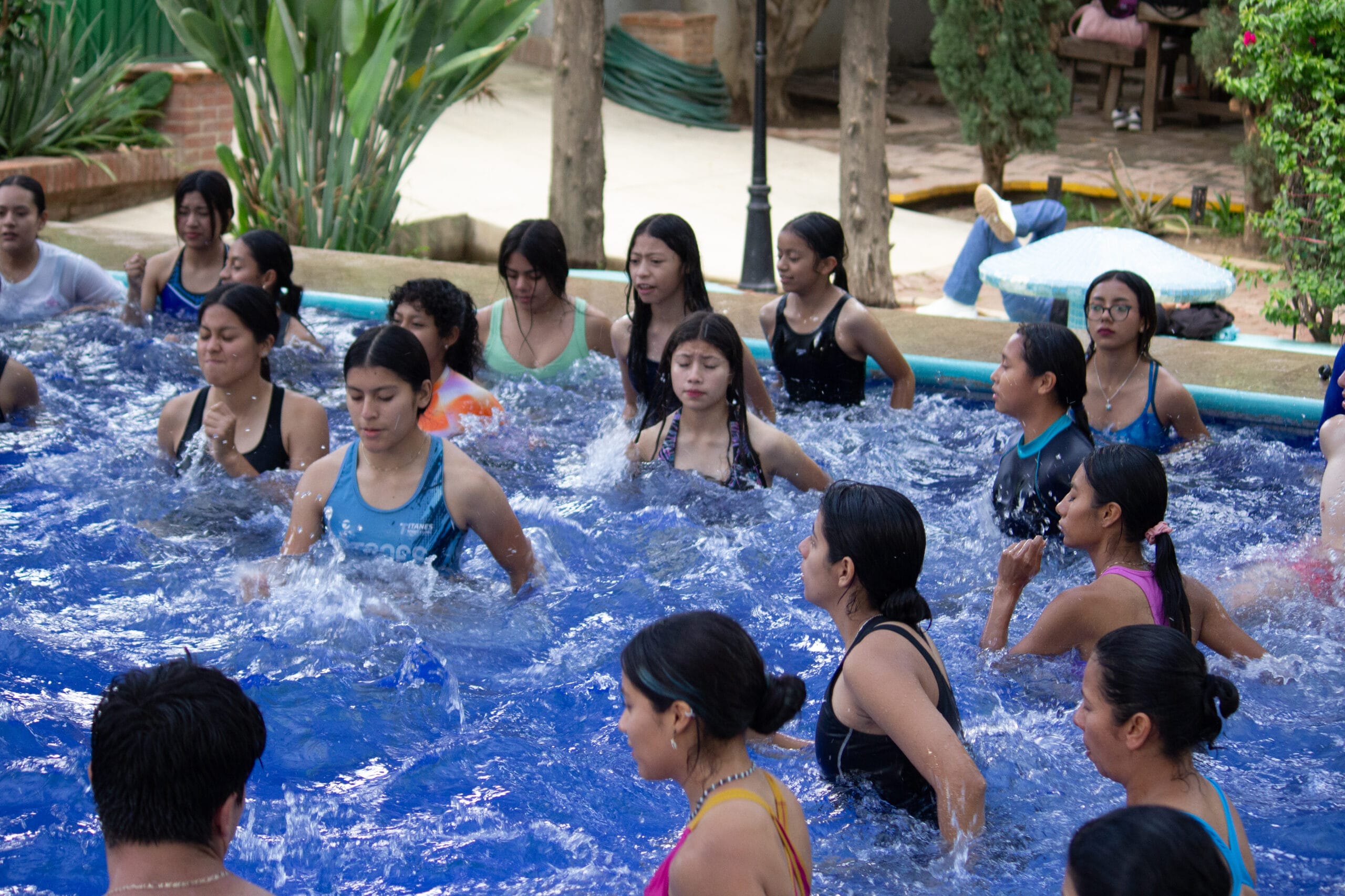
I watched athletes and students from the participating clubs and institutions share a pool for the first time. Some of them had never done aquajogging before.
Day 2: Altitude training and coach education
On July 10, participants traveled to Ixtepeji for the first mountain and altitude session.
We told participants to eat something light before the session and to carry extra clothing. The forecast called for cold weather and possible rain at altitude.
We arranged a bus for the larger group and a smaller vehicle for the rest.
The terrain required endurance, effort control, coordination, and adjustment to a different training environment. After the session, the group shared a meal before returning to Oaxaca de Juárez.

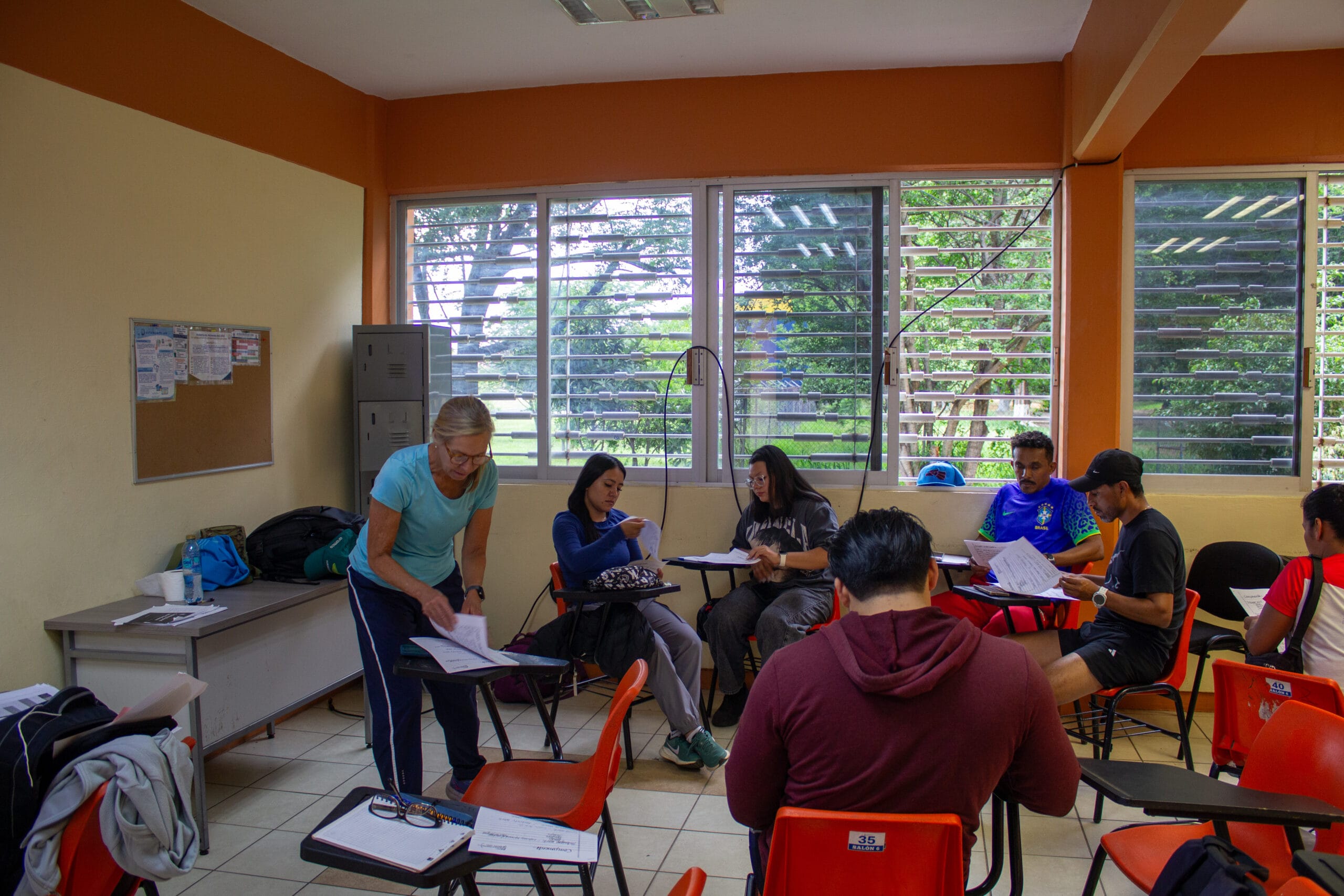
Jeanine later presented “Training Speed for Distance: How Speed Transformed Distance Running in the United States.”
The workshop covered how to define the purpose of a session, organize the warm-up, select exercises, design the main block, progress loads, plan recovery, and connect daily work to long-term athlete development. In the hands-on portion, small groups built a six-week training plan for a regional 5K–10K runner who was aerobically strong but kept losing position in the final lap.
The day ended with another practical training session.
Day 3: Track, sports nutrition, mobility, and strength
The third day began at Parque Primavera.
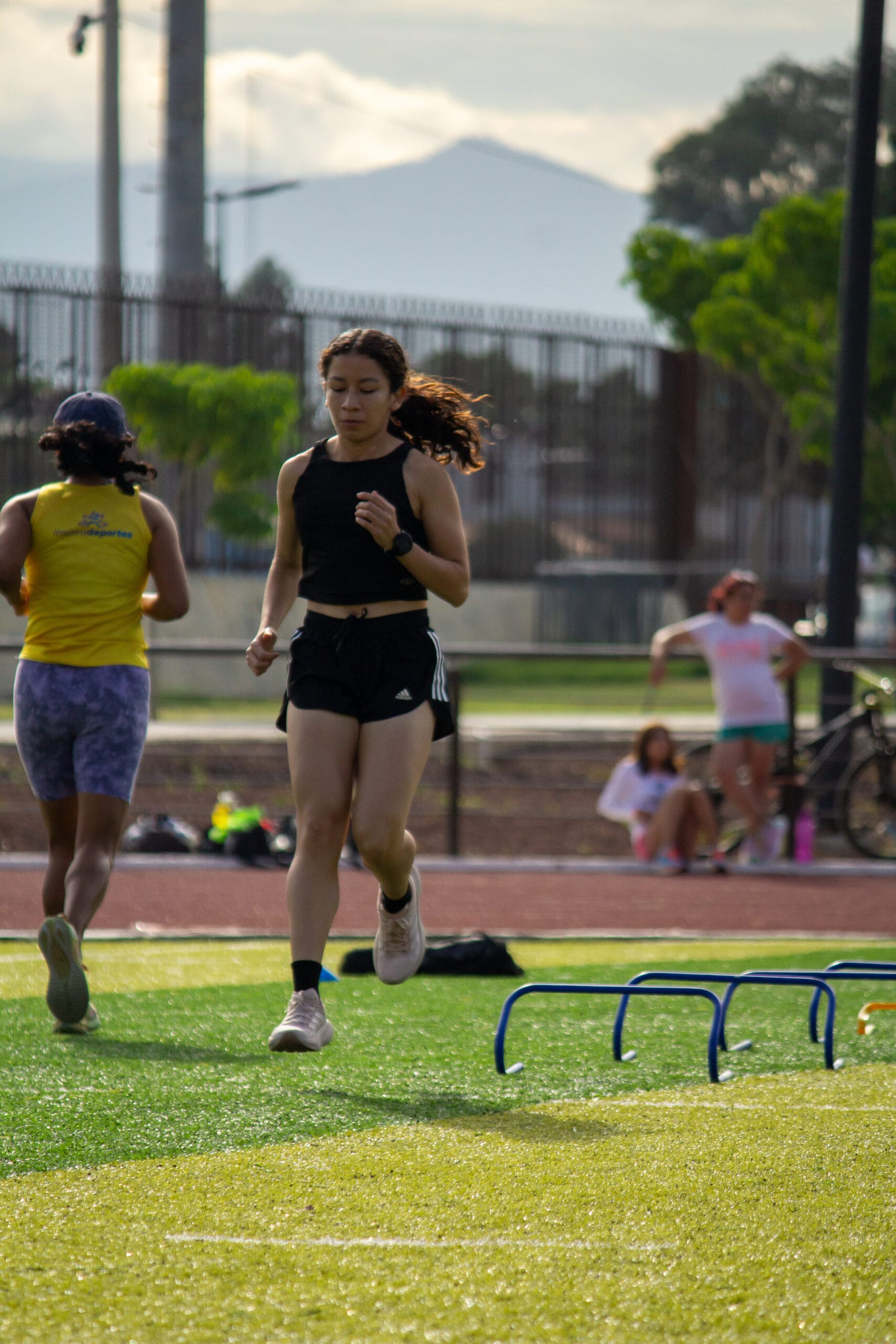
Athletes continued working on coordination, running mechanics, technical exercises, and track-specific movements. Coaches and students watched the sessions, joined discussions, and asked how to adapt the exercises for their own athletes.
Coach Uber led several practical sessions. Other local coaches and older athletes supported reaction drills, technical exercises, translation, and other parts of the training.
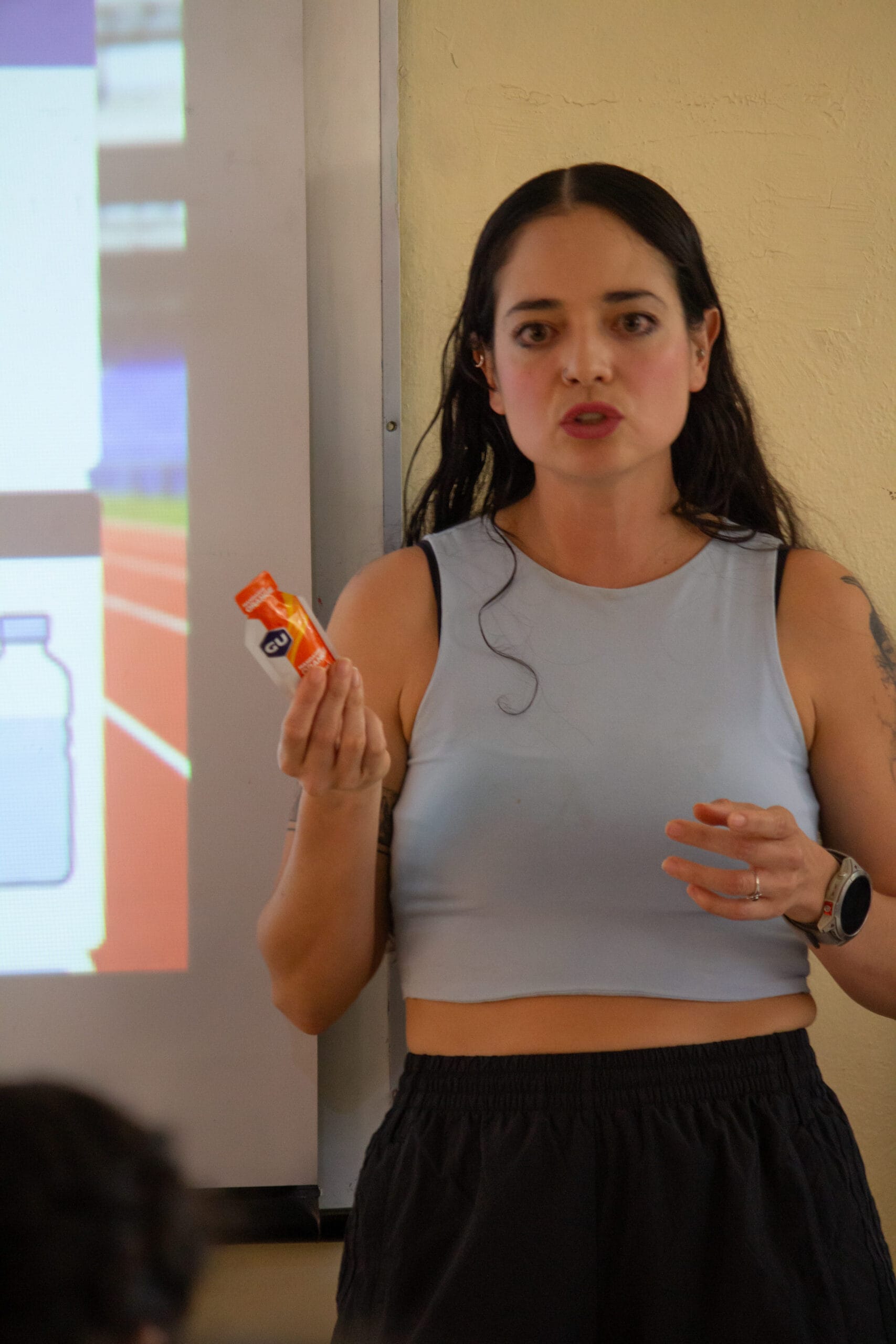
Nutritionist Elisa Reyes Valdés then presented a sports-nutrition session covering:
- Hydration.
- Food before training.
- Energy intake during exercise.
- Post-exercise recovery.
- Practical strategies for training and competition.
- Responsible use of sports-nutrition products.
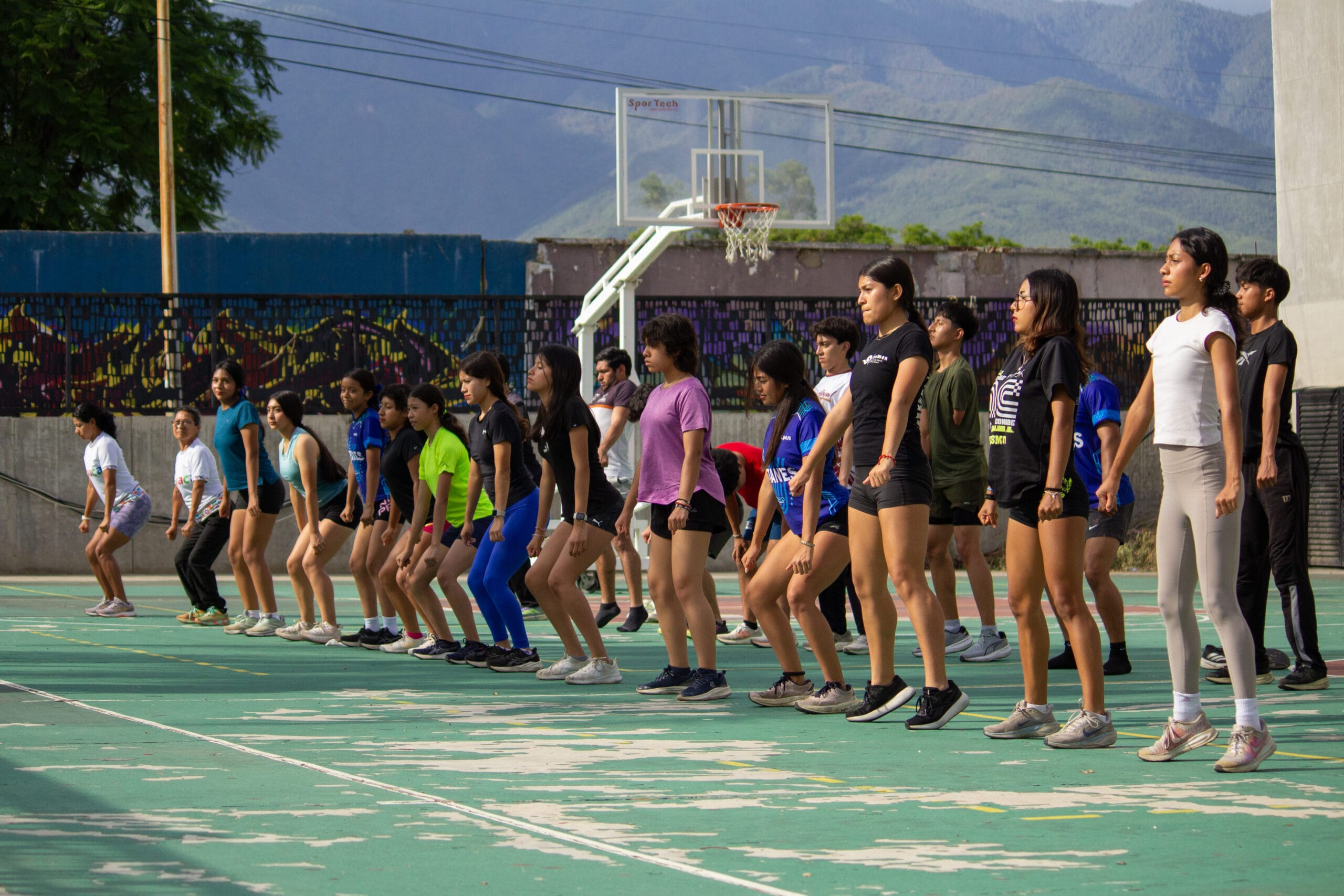
Later, we moved to the Hermanos Flores Magón Sports Complex.
The afternoon session began with athlete-led warm-ups and mobility drills. Older athletes had opportunities to practice leadership while coaches supported the group.
Participants then completed a functional-strength session focused on movement control, general preparation, strength, and injury prevention.
Day 4: Mountain training, recovery, and closing
The final day included a second training session in Ixtepeji.
By the second mountain session, athletes already knew the routine. They applied concepts from the previous three days and managed their effort with more confidence.
In the post-camp radio interview, we described how athletes, especially the younger participants, asked when they could go back to the mountain.
The group returned ready for recovery work.
Physical therapist Daniel Legaría (Licenciado en Terapia Física) provided:
- Mobility work.
- Muscular recovery.
- Post-training care.
- Physical assessment.
- Recovery after demanding sessions.
We closed the camp with a ceremony for athletes, coaches, students, specialists, volunteers, and collaborating organizations.
Four days went fast.
Institutional and community support
The camp required transportation, athletic facilities, classroom and track space, professional services, equipment, photography, and volunteer work.
Antorcha Campesina Oaxaca provided transportation between camp locations.
The Universidad Autónoma “Benito Juárez” de Oaxaca provided space for practical and educational activities, including the track and classrooms at Ciudad Universitaria.
The Instituto del Deporte del Estado de Oaxaca (Indeporte) provided space and gym facilities at the Hermanos Flores Magón Sports Complex for the functional-strength session.
We recognize:
- Jeanine Bourcier Holmlund
- Coach Uber Clain Herrera Aquino
- Daniel Legaría
- Dr. Emilio Nocedal Rojas
- Nutritionist Elisa Reyes Valdés
- Braulio Jiménez Hernandez
- Participating coaches and students
- Volunteers and logistics personnel
Dr. Emilio Nocedal Rojas and Elisa Reyes Valdés gave their presentations without professional fees.
Daniel Legaría provided physical-therapy and recovery services without charge.
Braulio Jiménez Hernandez photographed morning and afternoon activities across all four days without charge.
Coach Uber Clain Herrera Aquino coordinated Titanes’ recruitment, planning, venue coordination, logistics, communication, participant support, and practical sessions. I coordinated Oax Sport’s planning and delivery before and throughout the program.
Meet the Oax Sport team.
Goods secured, transported, or contributed through Jeanine
Jeanine secured and transported donated GU sports-nutrition products valued at US$2,486. She also personally contributed footwear, clothing, accessories, books, and educational materials valued at US$1,065.
Together, these goods had a documented value of US$3,550.
Donated GU sports-nutrition products: US$2,486
Jeanine secured and transported boxes of donated GU products to Oaxaca and helped distribute them to coaches, camp collaborators, and athletes.
Participants learned how and when to use gels, chews, drink mixes, and other products during training, competition, and recovery.
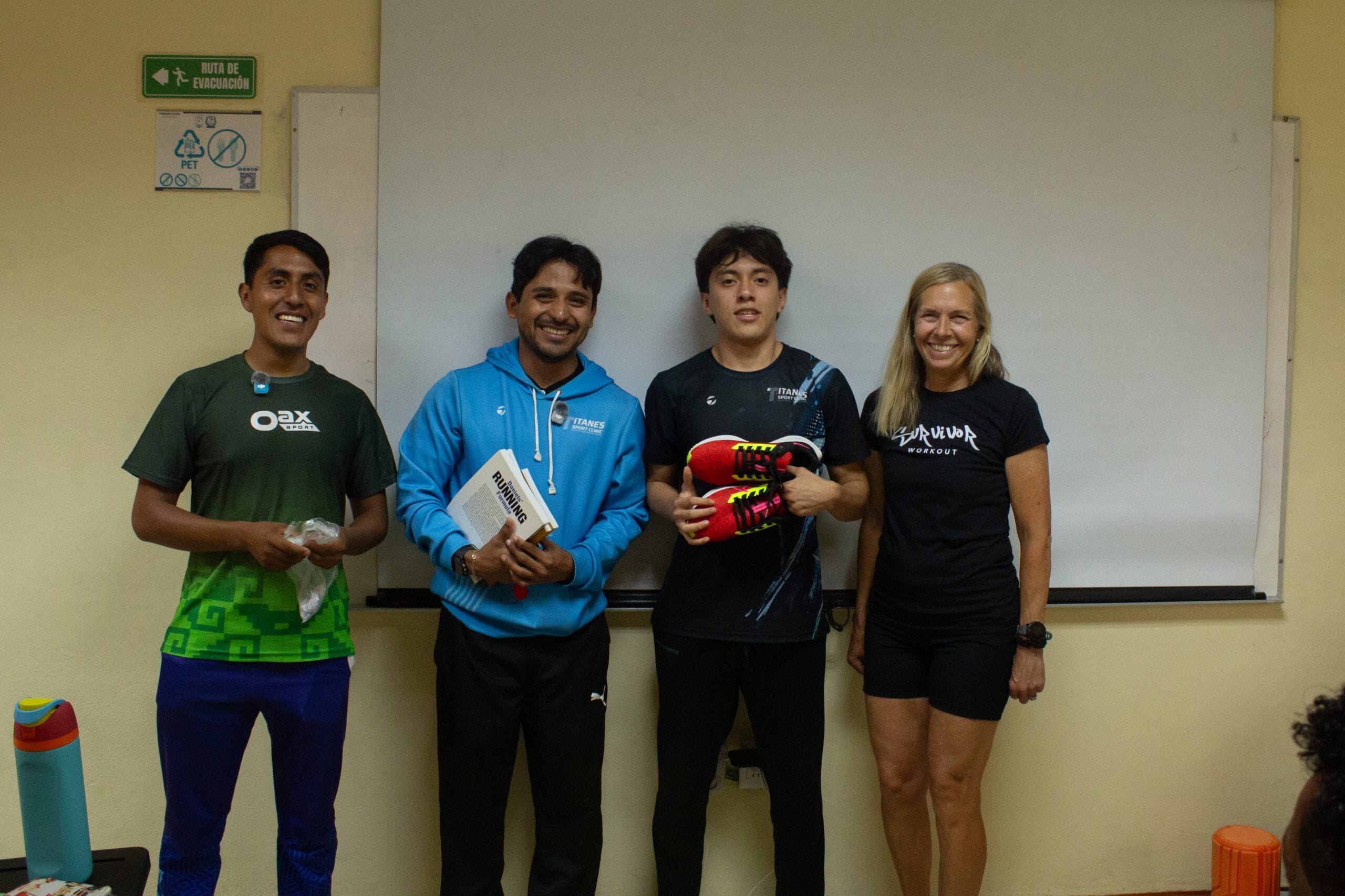
Nike Pegasus 38 women’s running shoes: US$260
Jeanine personally contributed two pairs of Nike Air Zoom Pegasus 38 women’s running shoes. Participants received them through a raffle.
Columbia Peakfreak women’s shoes: US$110
Jeanine personally contributed two pairs of Columbia Peakfreak women’s shoes. Participants received them through the same raffle.
Athletic clothing and accessories: US$579
Jeanine personally contributed clothing and sports accessories that participants received through raffles during the camp.
Books and educational materials: US$116
Jeanine donated books and educational materials to a university library.
The materials covered training-plan design using VDOT pacing, mental focus strategies for distance racing, preseason strength programming, speed development for distance runners, and core conditioning.
Students, coaches, and members of the academic community can use the materials.
Oax Sport apparel contributions
We made two separate apparel contributions.
We sold one group of donated apparel to a camp participant and generated US$81 for operating expenses.
We contributed more apparel valued at US$87 for a raffle and gave it to participants.
The report records these contributions separately to prevent double counting.
Financial record
The following figures provide public accountability and measure the camp’s reach.
These figures do not necessarily represent taxable income, deductible donations, or accounting expenses. This report is not a tax receipt or certification of deductibility.
The English report uses U.S. dollars and a fixed reporting exchange rate of:
US$1 = MX$17.28
The report calculates totals from the exact accounting records before rounding. All figures round to the nearest dollar from exact accounting amounts. Individual rounded lines may not sum to the displayed total.
Cash resources
- Participant registration, cost-recovery fees, and contributions: US$1,583
- Oax Sport general funds and proceeds from donated apparel: US$190
Total cash resources: US$1,773
The Oax Sport amount consisted of:
- General-fund resources: US$109
- Proceeds from donated apparel sold for the camp: US$81
Operating expenses
- Participant transportation: US$828
- Swimming-pool access and use: US$347
- Gifts: US$162
- Ixtepeji park admission: US$185
- Food for the organizing team: US$152
- Operational logistics and minor expenses: US$98
Total operating expenses: US$1,773
The camp used all cash resources for operations.
Cash balance: US$0
Cash income and expenses matched, leaving no surplus or deficit.
Goods contributed in kind
Goods secured, transported, or personally contributed through Jeanine Bourcier Holmlund
- Donated GU sports-nutrition products secured and transported through Jeanine: US$2,486
- Nike Pegasus 38 women’s footwear personally contributed by Jeanine: US$260
- Columbia Peakfreak women’s footwear personally contributed by Jeanine: US$110
- Athletic clothing and accessories personally contributed by Jeanine: US$579
- Books and educational materials personally contributed by Jeanine: US$116
Donated GU products secured and transported through Jeanine: US$2,486
Goods personally contributed by Jeanine: US$1,065
Total goods secured, transported, or personally contributed through Jeanine: US$3,550
Additional Oax Sport contribution
- Apparel for the participant raffle: US$87
Total goods contributed in kind: US$3,637
The footwear values reflect Jeanine’s documented cost for four pairs: two pairs at US$130 each and two pairs at US$55 each.
Pro bono professional services
- Physical therapy and recovery by Daniel Legaría: US$723
- Sports-psychology presentation by Dr. Emilio Nocedal Rojas: US$289
- Sports-nutrition presentation by Elisa Reyes Valdés: US$289
- Four days of photography by Braulio Jiménez Hernandez: US$1,157
Estimated value of pro bono professional services: US$2,459
These figures use conservative estimates for comparable professional services. Oax Sport and Titanes did not pay these amounts.
This subtotal does not include Jeanine’s coaching, workshop, or pre-camp university guest-lecture services because the report does not assign a monetary value to her professional work.
Jeanine’s unreimbursed travel and lodging
Jeanine paid the following documented costs:
- Airfare and baggage: US$385
- Lodging in Oaxaca: US$528
Total unreimbursed travel and lodging: US$913
The airfare and baggage allowed Jeanine to travel to Oaxaca and carry donated products and other materials for the camp.
Total documented project value
- Cash resources administered: US$1,773
- Goods contributed in kind: US$3,637
- Estimated pro bono professional services: US$2,459
- Jeanine’s unreimbursed travel and lodging: US$913
Total estimated and documented project value: US$8,782
This total excludes:
- Jeanine’s professional coaching, workshop, and pre-camp university guest-lecture services.
- Her time preparing materials before the camp.
- Volunteer work by organizers, coaches, students, and collaborators.
- The economic value of institutional spaces and facilities.
- Other personal or incidental costs without documentation.
The total records the project’s minimum documented economic value.
Results
- Sixty athletes, coaches, and students took part in the official camp.
- Ten clubs and institutions participated.
- Approximately ten organizers, specialists, volunteers, and logistics personnel supported the program.
- Participants completed four days of training and education.
- The program included track, mountain, swimming-pool, strength, mobility, and recovery sessions.
- Specialists gave guidance in psychology, nutrition, and physical recovery.
- Coaches and students studied training-plan design.
- Older athletes led warm-ups and mobility drills.
- Coach Uber and other local coaches led and supported practical sessions.
- Athletes received donated sports-nutrition products and instructions for their use.
- Participants received footwear, clothing, and accessories through raffles.
- Jeanine donated educational materials to a university library.
- Before the camp, Jeanine gave a separate guest lecture to university students and professors at the Facultad de Cultura Física y Deporte, LED UABJO.
- Braulio Jiménez Hernandez photographed all four camp days.
- Clubs, institutions, coaches, and community organizations worked together across the program.
Conclusion
Across four days, 60 athletes, coaches, and students from ten clubs and institutions trained together at a track, a pool, a gym, and in the mountains of Ixtepeji. Specialists gave instruction in psychology, nutrition, strength, and recovery, while coaches and students took part in practical sessions.
The participants worked hard. No one trained alone.
Jeanine Bourcier Holmlund made the camp possible. She worked without compensation, paid for her travel and lodging, prepared and delivered training sessions, and gave a separate pre-camp university lecture. She also secured and transported donated GU products and personally contributed footwear, clothing, accessories, books, and educational materials.
The goods Jeanine secured, transported, or personally contributed were valued at more than US$3,500.
Specialists, photographers, institutions, organizations, volunteers, and local coaches reduced the project’s cash expenses through unpaid work, contributed services, transportation, and facility access.
Registration income alone could not cover a program of this size. The camp took place because each group covered a different part of the work.
Listen to the Tribu al Extremo radio episode about the camp: Thursdays with Tribu: Training Camp 2026.
What Oax Sport funded
We contributed US$109 from the Oax Sport general fund and US$81 from donated-apparel sales. Participant registration fees and contributions covered the rest of the camp’s cash operating expenses.
Registration income did not cover the contributed goods, pro bono services, or Jeanine’s unreimbursed travel and lodging. Those contributions accounted for most of the program’s documented value.
What Oax Sport did not fund
We did not pay for Jeanine’s travel, lodging, coaching, workshop, pre-camp university lecture, or other professional services.
We did not purchase the donated GU sports-nutrition products. We also did not purchase the footwear, clothing, accessories, books, or educational materials that Jeanine personally contributed, and we did not pay the pro bono specialists.
Legal and transparency
Oax Sport Inc. is a U.S. 501(c)(3) nonprofit. EIN: 86-3407818.
Oax Sport A.C. is a registered Mexican nonprofit based in Oaxaca, Mexico. RFC: OSP-230216-SG0.
Donations support athletes from underserved communities in Oaxaca, Mexico.
If you need a receipt or tax documentation, contact us and tell us whether you donated to Oax Sport Inc. in the United States or Oax Sport A.C. in Mexico.
Credits
Organization: Oax Sport and Titanes
Oax Sport coordination: Juan Zurita Victoria
Titanes coordination: Coach Uber Clain Herrera Aquino
Pre-camp university collaboration: Facultad de Cultura Física y Deporte, LED UABJO
Photography: Braulio Jiménez Hernandez
Photo gallery
View the complete photographic record of the Oax Sport–Titanes Athletics Camp 2026, including training sessions in Oaxaca de Juárez and Ixtepeji across all four days of the camp.

Photography by Braulio Jiménez Hernandez. View the complete 29-photo album on Flickr.
Support athletes in Oaxaca. You can also contact us about volunteer opportunities.
Donations are processed securely through Givebutter.
Have you trained at altitude or attended a community sports camp?
Last updated: August 8, 2026
Discover more from Oax Sport
Subscribe to get the latest posts sent to your email.